The transformation of digital payments in Honduras has entered a new phase. In recent years, the country has launched initiatives to expand access to financial services, strengthen digital banking, and promote greater financial inclusion through electronic channels. These advances reflect an ecosystem that continues to evolve gradually, in line with a regional trend toward greater digitization of transactions.
However, as the ecosystem grows, so does its complexity. The entry of new participants, business models, and technologies is changing the nature of the challenges facing the industry. While a few years ago the priority was to increase the number of users and digital transactions, today the conversation is shifting toward another aspect: the ability to integrate all these components so they function in a coordinated, secure, and efficient manner.
This reality is particularly relevant for Honduras, where cash continues to play a predominant role in the economy, remittances remain a key driver for millions of people, and electronic transfers are becoming increasingly prominent. Unlike other markets in the region that are moving toward national instant payment systems, the country faces the challenge of strengthening an ecosystem where different payment methods coexist and must evolve in a complementary manner. The challenge is not to replace one method with another, but to ensure that all can be integrated to meet users’ diverse needs.
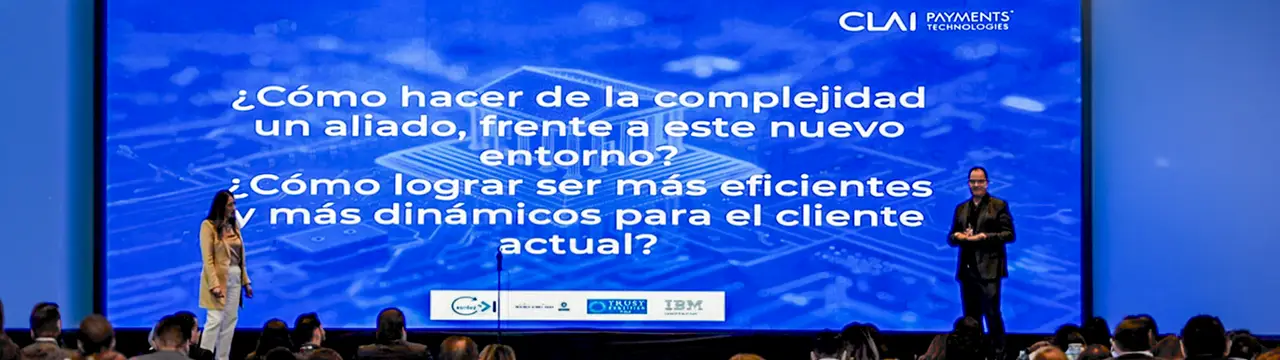
That was precisely the focus of the panel “Digital Payments in Honduras: From Transaction Growth to Frictionless Integration,” held during the Banking Tech Summit Honduras, where Esteban Corrales, Manager for CLAI PAYMENTS® Technologies Costa Rica, and Carolina Mondragón, Chief Marketing Officer, shared their insights on the current state of the financial ecosystem and the challenges that will shape its evolution in the coming years.
Transactional growth is a positive indicator, but it is not enough
The evolution of digital payments is typically measured by the growth in electronic transactions, the adoption of new channels, or the increase in the number of users accessing financial services through digital platforms. These are relevant indicators because they reflect a shift in consumer habits and greater trust in digital solutions.
In Honduras, this process has been accompanied by institutional initiatives aimed at strengthening the National Payment System and expanding financial inclusion. The National Financial Inclusion Strategy 2025–2030 recognizes the importance of modernizing the sector’s infrastructure, promoting interoperability, and facilitating the participation of new actors who can help expand the range of financial services available.
This approach makes even more sense in a market where different payment methods coexist with varying levels of adoption. While some users continue to prefer cash for their daily transactions, others increasingly rely on electronic transfers or funds from remittances. Rather than promoting a single payment method, the challenge lies in developing an infrastructure capable of supporting all these scenarios and allowing users to decide for themselves how they want to conduct their transactions.
However, growth alone does not guarantee an ecosystem that is prepared to meet the demands of the future. As transactions increase, so do the connections needed to make them possible. Every new customer service channel, every partnership with a technology provider, every integration with a fintech company, and every value-added service introduces new relationships between systems that must operate in sync.
In other words, the success of digitalization creates a new challenge: managing an increasingly complex operation.
The real challenge begins when the ecosystem ceases to be linear
A decade ago, a transaction involved a relatively small number of participants. Today, multiple actors with specialized roles are involved behind the scenes of each transaction: financial institutions, processors, payment networks, acquirers, authentication providers, fraud prevention platforms, cloud services, and data analytics solutions, among others.
This evolution has made it possible to develop more agile services and meet user expectations. However, it has also increased operational complexity. The more connections there are, the greater the need to ensure that information flows securely, that systems remain available, and that the addition of new participants does not entail lengthy or difficult-to-maintain integration processes.
Therefore, the main challenge is no longer simply to enable new digital services, but to build an infrastructure capable of coordinating an ecosystem that will continue to expand. The complexity will not disappear; on the contrary, it will continue to increase as market needs evolve and new business models emerge.
Frictionless integration is an infrastructure challenge
When discussing frictionless experiences, people often think of faster user processes or more intuitive interfaces. However, most of the friction in a payments ecosystem occurs behind the scenes of each transaction, where multiple systems converge and must exchange information in real time.
In this context, frictionless integration means that financial institutions can incorporate new channels, establish partnerships with third parties, or adopt new technological capabilities without compromising the stability of their operations. It also means that transactions take the best available route, that security mechanisms are in place throughout the entire processing cycle, and that the infrastructure maintains high levels of availability even when volumes increase or environmental conditions change.
This same logic applies to traditional channels such as the ATM network. In an environment where profitability and operational efficiency are becoming increasingly important, these assets can evolve beyond their role of dispensing cash. The possibility of integrating them with new services, facilitating remittance-related transactions, or turning them into points of interaction for various financial processes demonstrates that modernization also involves maximizing the value of existing infrastructure, not merely incorporating new digital channels.
This vision takes on special relevance for Honduras, where initiatives to modernize the financial system are advancing in parallel with the entry of new participants and a regulatory agenda aimed at strengthening interoperability and innovation. Infrastructure will cease to be merely an operational component and will instead become a strategic factor that determines the ecosystem’s ability to adapt.
The next stage of digital payments will be built on the ability to integrate
Digital transformation will continue to expand the number of players participating in each financial service. New providers, new channels, and new technological models will continue to be incorporated into an infrastructure that, by its very nature, will become increasingly distributed. Therefore, complexity will not decrease; it will increase.
In this scenario, financial institutions will need much more than one-off solutions to respond to market changes. They will require architectures that facilitate interoperability, allow them to evolve without constantly replacing existing infrastructure, and ensure that innovation can be incorporated quickly without affecting operational continuity.
That is precisely the shift in focus that is now beginning to take hold in the industry. The conversation no longer revolves solely around transactional growth, but rather around the ability to transform that growth into a connected, resilient ecosystem that is prepared to evolve. For Honduras, this will be one of the factors defining the development of digital payments over the coming years and the starting point for building a financial infrastructure capable of responding to the challenges of an increasingly digital economy.

At CLAI PAYMENTS® Technologies, we believe that the evolution of the financial ecosystem requires much more than one-off technological solutions. That is why we work as a technology partner that supports financial institutions, payment processors, and other market players in integrating their infrastructure, helping them connect systems, streamline operations, and strengthen the resilience of their platforms in an increasingly dynamic environment. Our expertise in card issuance, payment orchestration, and data protection enables us to support modernization efforts that address current market needs and prepare organizations for the challenges ahead.
If you’d like to learn how to build a more integrated, resilient, and future-ready payments ecosystem, please provide your contact information below, and a dedicated representative will contact you.