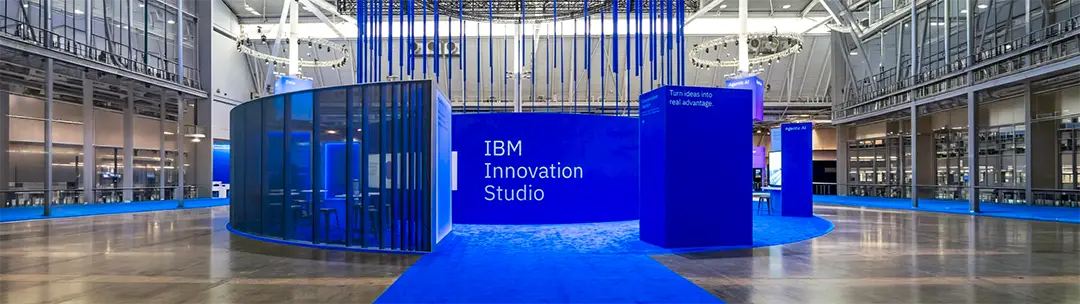
The 2026 edition of IBM Think, held in Boston, left a clear impression on technology leaders, developers, and global organizations: the conversation around artificial intelligence has entered a new phase.
It is no longer just about exploring generative capabilities or automating isolated tasks. The discussion now centers on how organizations can build operational models capable of integrating AI, data, automation, and the hybrid cloud in a sustainable, governable, and scalable manner.
CLAI PAYMENTS® Technologies was present at an event where much of the conversation centered on the operational evolution of organizations in the face of technologies such as AI, automation, hybrid cloud, and data integration.
One of the most prominent themes throughout the event was the need to transform investment in artificial intelligence into truly operational capabilities within organizations.
The Shift from Experimental AI to Operational AI
One of the most prominent concepts discussed during the conferences was “agent-based AI”: systems capable of executing tasks, making decisions, and coordinating actions autonomously within complex business processes. However, the event’s focus made it clear that the real challenge lies not only in developing intelligent agents but also in ensuring they can operate within fragmented, regulated, and highly distributed business ecosystems.
IBM presented a vision centered on four interconnected pillars: agents, data, automation, and the hybrid cloud. The logic behind this approach is particularly relevant because it addresses a reality that many organizations are already facing: technological complexity is no longer associated solely with the volume of systems but now also depends on the ability to coordinate across platforms, data, and AI models.
In other words, the technology conversation is shifting from individual tools to enterprise orchestration models.
Interoperability: A Discussion That Also Impacts the Financial Ecosystem
Although much of the event’s discussion focused on enterprise artificial intelligence, several of the insights ultimately connect directly to the challenges currently facing the financial industry in Latin America.
The rise of instant payments, open ecosystems, integration among financial players, and users’ new digital expectations are forcing organizations to rethink how they evolve their technological infrastructures.
Concepts such as interoperability, modularity, and orchestration are beginning to play a much more strategic role in the technological evolution of the financial industry.
Interoperability can no longer be understood solely as the technical ability to connect systems. Today, it represents the ability to enable different technologies, transactional models, and players to operate in a coordinated manner without increasing operational friction or limiting the capacity for future evolution.
Indeed, many of the discussions at IBM Think 2026 centered on how to build technology ecosystems that are more connected, flexible, and prepared to operate in hybrid environments. For organizations in the financial ecosystem, this approach is becoming particularly relevant at a time when the speed of technological adaptation can determine their ability to remain competitive.
Real-time data and automation: two increasingly interconnected pillars
Another central theme of the event was the need to build architectures based on real-time data. IBM announced new capabilities focused on data integration and continuous processing, emphasizing that enterprise AI requires connected, governed, and contextualized information to operate efficiently.
This point is particularly relevant for industries where transaction speed, traceability, and real-time decision-making are critical factors—such as the financial and digital payments sectors.
As organizations integrate more automation and artificial intelligence into their operations, the quality and availability of data are becoming direct enablers of operational efficiency. Automation is no longer limited to reducing manual tasks; it now seeks to coordinate entire infrastructures, connect information flows, and enable more agile responses within complex ecosystems.
The hybrid cloud continues to establish itself as an operational model
One of the most consistent messages from IBM Think 2026 was that the hybrid cloud continues to position itself as one of the most viable models for enterprise technological evolution. More than just a technological trend, the cloud was presented as a key element for balancing scalability, security, data sovereignty, and operational flexibility.
In highly regulated sectors, this point takes on even greater relevance, as the ability to operate across multiple technological environments without losing control, governance, or integration capabilities is becoming essential for organizations that need to evolve rapidly without compromising operational stability.
An ecosystem that is already entering a new phase
IBM Think 2026 made it clear that enterprise digital transformation is entering a new phase.
The conversation is no longer focused solely on incorporating new technologies, but rather on how to ensure that all these capabilities can coexist, integrate, and evolve sustainably within increasingly complex organizations.
For CLAI PAYMENTS® Technologies, participating in events like IBM Think 2026 represents an opportunity to continue connecting global discussions on AI, automation, and interoperability with the real challenges of the financial ecosystem in Latin America.
The difference now lies in the ability to build infrastructures that can adapt to change without increasing complexity, operational friction, or technological dependence.
If you’d like to integrate solutions tailored to the needs of today’s financial ecosystem, please provide your contact information below, and a specialized representative will contact you.