This phenomenon is transforming not only the way in which consumers and businesses conduct transactions, but also the role of central banks in the modernization of the regional financial system.
How have payment systems evolved in the region?
Traditionally and to this day, financial transactions in Latin America depend, for the most part, on banking systems that require a certain complexity in terms of production and costs. Interbank payments between different entities can take days and, in some cases, involve high fees. In some cases, this lack of interbank connection and poor connectivity not only affects financial companies, but also limits users’ access to financial services, especially in hard-to-reach areas.

The economic and social context in Latin America, characterized by a high level of labor informality and a population with little access to bank accounts, has made the need for more agile payment solutions even more urgent. In this scenario, central banks have begun to explore and adopt instant payment systems as a way to improve the efficiency of the financial system and reduce inequalities in access to it.
Brazil, Chile and Mexico: pioneers and leaders in the region
Brazil, through its Pix instant payment system, has been one of the pioneers in the region. Since its launch in November 2020, Pix has revolutionized the payments landscape in the country, enabling online transfers with immediate credit 24 hours a day, 7 days a week, with no commissions for users. This system has been a resounding success, with millions of people and businesses using Pix daily to make payments of all kinds, from online purchases to user-to-user transfers. Ease of access, free of charge and speed have been key factors in his success.
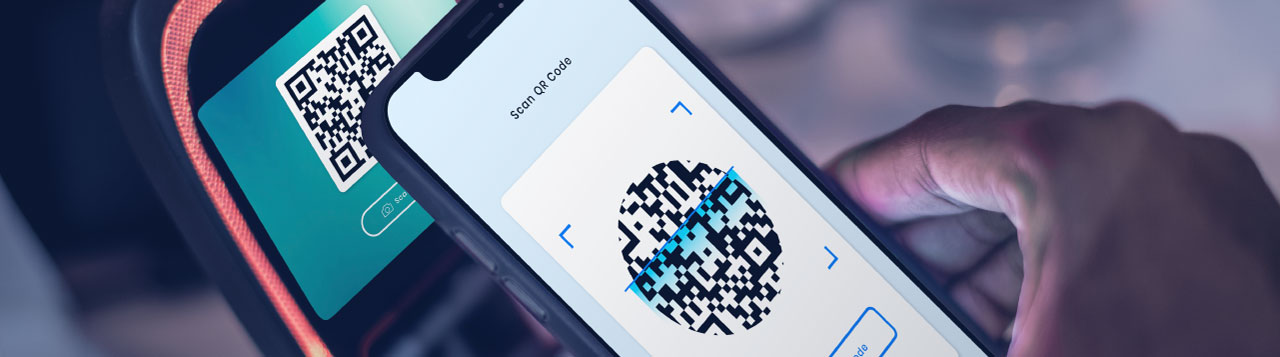
Mexico, for its part, launched in 2021 the CoDi (Cobro Digital) system, based on QR technology and designed to allow immediate payments through mobile devices. Although CoDi has had a slower adoption rate than Pix, the system has been fundamental in Banco de México’s financial inclusion strategy, seeking to connect the informal sectors of the economy with the formal financial system.

In Chile, although an immediate payment system has not been established at the regional level, instant transfer technology is already being managed through the Central Bank of Chile and the Automated Clearing Center or CCA, a network integrated with the country’s main banks, which acts as a mediator between these entities and users to carry out instant transfers, credits and debits.
Thanks to the experience of AZ7®, our omnichannel platform for payment methods, we have supported different financial entities in Chile, facilitating the integration scheme of Financial Electronic Transfers, the interoperability that requires an active process of clearing, handling, transfers, reservation, connection, regulations and even the security of these instant payments, enabling the connection with the clearing center and the transactional success that directly impacts the development and advancement of this type of payments in Latin America.
The impact of instant payments: a leap to financial inclusion
Instant payment systems driven by central banks also have a significant impact on financial inclusion in Latin America. A high percentage of the Latin American population still lacks access to traditional banking services. According to World Bank data, more than 50% of adults in the region do not have access to bank accounts. Instant payment systems allow users to make transactions through their cell phones, without the need for a traditional bank account, opening the door to millions of users who can now make use of financial services.
What comes with the inclusion of instant payment systems in Latin America?
As more Latin American countries implement instant payment systems, the trend promises to consolidate throughout the region. Central banks continue to invest in the infrastructure needed to support these systems, while users and companies are adopting new technologies with increasing speed. The adoption of instant payment systems is expected to expand in the coming years, not only in larger countries such as Brazil and Mexico, but also in smaller economies seeking to improve their financial industries.
The future of the financial sector in Latin America will be marked by increasing digitalization. In addition to the creation of faster and more accessible payment systems, new technologies such as artificial intelligence will likely be integrated, which will further improve the security and efficiency of transactions. The interconnection of payment systems between countries, driven by central banks, could also facilitate regional trade, cross-border payments and enhance economic integration.
While instant payments have already been implemented in other regions, such as Europe with SCT Inst, the United Kingdom with Faster Payments, Zelle and RTP in the United States, among others, the phenomenon is just beginning in the Latin American region, where banking companies require extensive work to continue innovating their solutions and implementing interbank models that allow them to keep pace with the growing services of the regional market and continue to attract unbanked users. At CLAI PAYMENTS® Technologies we work with powerful solutions to continue offering efficiency, effectiveness and innovation. If you want to know more about us or contact our specialized team, please leave us your contact information below.